


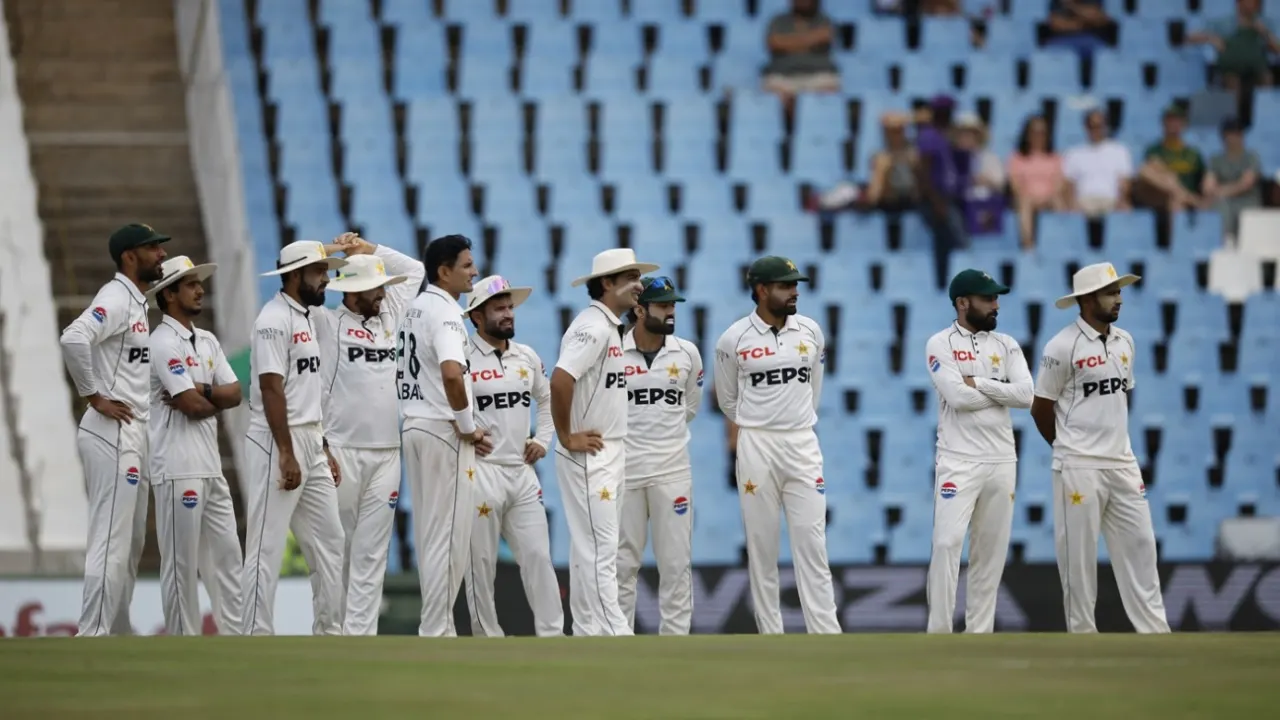
Pakistan’s journey in the World Test Championship (WTC) has been riddled with setbacks, inconsistent strategies, and missed opportunities. As they end this cycle ranked eighth, questions loom over the country’s approach to red-ball cricket. Here’s an in-depth look at what went wrong and the changes needed for a better future.
A Wasted WTC Cycle for Pakistan
The ongoing WTC cycle has been nothing short of disappointing for Pakistan. Despite a busy home Test season—their busiest this century—results failed to match expectations. With only two Tests left in this cycle, against the West Indies, the matches hold no significance in the WTC rankings as both teams occupy the bottom two spots.
What went wrong? A lack of planning, poor form, and constantly shifting strategies left Pakistan unable to find their footing.
Key Stat: Pakistan does not play another Test match until October and will feature in only two Tests in the next 14 months.
Missed Opportunities in Domestic Cricket
One glaring issue was the scheduling and management of Pakistan’s premier domestic tournament, the Quaid-e-Azam Trophy (QeA).
- The QeA tournament started late, on October 26, when Pakistan’s home Test season was almost over.
- A chaotic structure and poor timing meant the QeA couldn’t prepare players for international red-ball challenges.
- Only the final match of the QeA Trophy was broadcast live, further highlighting the lack of focus on Test cricket development.
This negligence in nurturing red-ball talent left Pakistan ill-prepared for the rigors of Test cricket, especially against top-tier teams like South Africa and England.
Inconsistent Strategies Hurt Pakistan
Pakistan’s approach to Test cricket has been plagued by inconsistency. Over the course of the WTC cycle:
- They started strong with a convincing win against Sri Lanka under Mickey Arthur and coach Grant Bradburn, introducing the much-touted “Pakistan Way.”
- However, within months, the PCB leadership, coaching staff, and even captain Babar Azam were replaced, leaving the “Pakistan Way” abandoned.
- Team selections oscillated between all-pace attacks, spin-heavy lineups, and medium-pace combinations, none of which yielded consistent results.
For instance:
- In South Africa, Pakistan played four medium-fast bowlers while benching Naseem Shah, despite him bowling in practice faster than anyone in the playing XI.
- Against England at home, they fielded all-spin attacks on turning pitches, only to lose comprehensively.
Such erratic strategies underline Pakistan’s inability to define a clear, long-term approach to Test cricket.
Key Challenges in Player Development
Pakistan has struggled to develop a balanced squad capable of competing at the highest level.
- Fast-Bowling Woes:
Unlike South Africa’s lethal trio of Kagiso Rabada, Anrich Nortje, and Marco Jansen, Pakistan lacks high-quality, consistent pacers. While they have promising talents like Naseem Shah and Shaheen Afridi, poor management of players has often sidelined them. - Fragile Batting Lineup:
Pakistan’s batting remains vulnerable, with frequent collapses exposing a lack of temperament and technique in the red-ball format. - Overlapping Formats:
The PCB’s focus on white-ball cricket, including the PSL and domestic T20 tournaments, has often come at the expense of Test preparation.
Is Test Cricket a Priority for Pakistan?
One major concern is whether Test cricket holds enough importance for the Pakistan Cricket Board (PCB). The PCB’s efforts seem more directed towards preparing for the upcoming ICC Champions Trophy 2025 and hosting the PSL, rather than building a sustainable red-ball cricket strategy.
“Pakistan is a cricket-obsessed nation, but to truly succeed in Test cricket, we need a roadmap that goes beyond short-term fixes,” said captain Shan Masood.
Masood has been a vocal advocate for consistent Test schedules and better planning. However, his tenure has also been marked by frequent changes in leadership and coaching, making it difficult to implement a cohesive strategy.
The Road Ahead for Pakistan’s Test Cricket
To rebuild its Test cricket foundation, Pakistan must focus on the following:
1. Prioritize Domestic Red-Ball Cricket
- Schedule the Quaid-e-Azam Trophy earlier in the season to align with the Test schedule.
- Broadcast domestic matches to build interest and allow players to gain experience under pressure.
2. Develop a Consistent Strategy
- Define a clear philosophy for Test cricket, whether focused on pace, spin, or balanced combinations.
- Stick to a long-term plan regardless of short-term results.
3. Invest in Player Development
- Provide regular opportunities for emerging pacers and batters in both domestic and international cricket.
- Avoid overburdening players by balancing commitments across formats.
4. Better Scheduling
- Pakistan needs a well-structured calendar with consistent Test matches, rather than prolonged gaps.
- Advocate for more home Tests to leverage familiar conditions and develop young players.
FAQs on Pakistan’s Test Cricket Struggles
1. Why has Pakistan struggled in the WTC cycle?
Pakistan’s inconsistent strategies, poor planning, and a lack of focus on red-ball cricket have led to underwhelming performances in this WTC cycle.
2. What is the “Pakistan Way”?
The “Pakistan Way” was a long-term roadmap for Test cricket introduced under Mickey Arthur. However, it was quickly abandoned following changes in PCB leadership.
3. Why was Naseem Shah benched in South Africa?
Despite being fit, Naseem Shah was left out in favor of medium-fast bowlers, highlighting poor selection decisions.
4. Does Pakistan prioritize Test cricket?
Currently, Test cricket seems to take a backseat to white-ball cricket and T20 leagues like the PSL, which receive more focus and resources.
5. What’s next for Pakistan in Test cricket?
After this WTC cycle, Pakistan will only play two Tests in the next 14 months. Rebuilding will require a focus on consistency, better scheduling, and nurturing red-ball talent.
Final Thoughts:
Pakistan’s Test cricket needs urgent attention. From poor domestic planning to inconsistent strategies, the problems are plenty. But with the right leadership, focused player development, and a clear roadmap, the team can reclaim its lost glory in red-ball cricket.
For more cricket insights and updates, visit FindCric.com!

1 Comment
Pingback: Is Pakistan's Spin-Dominated Strategy the Key to Test Success?